Posts

Showing posts with the label Japanese occupation

Tze Yin Khor, Lubok Antu – The Japanese Occupation 1941
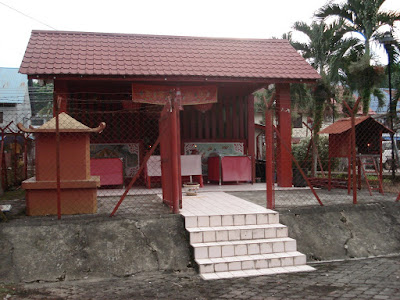
Image
The Japanese Occupation started in 1941 in Sarawak and ended in 1945. Tze Yin Khor in Lubok Antu was partly founded due to the war. Lubok Antu is a small town of the Sri Aman division, about 4 hours from Kuching by road; from the Trans Borneo highway junction alone, it take more than 30 minutes to reach this small border town, one of the very few townships in Sarawak sits next to Kalimantan of Indonesia. In 1941, after Kuching was controlled by the Japanese force, small inland towns were like a domino, one by one fallen to the Japanese as their soldiers moved along the Batang Lupar to the interior. Lubok Antu was no exception. As the Japanese landed in Engkilili which was the nearest town to Lubok Antu, and about a day journey by river, the soldiers faced fierce resistance from the Iban warriors at the Batang Lupar upstream. As the Ibans slowly lost ground to modern gun power, anxiety permeated the Lubok Antu township residents where many of them were Chinese. ...

Tze Yin Khor, Sri Aman – The History & The Live Crab Feng Shui

Image
Tze Yin Khor is located in Sri Aman, the capital of 2nd Division of Sarawak; it is about 200 km by road from Kuching. There is only one traditional Chinese temple in this small town. 9 Batang (river) Lupar next to Tze Yin Khor The temple is located at the river bank of Batang Lupar, famous for the Tidal Wave called Benak locally. This is one of the few temples in Sarawak which is more than a century. The present glamorous architecture was completed in 1993. Around the year 1849 when James Brooke established its forces in the Skrang region near Sri Aman, the Chinese, particularly the Teoh Chew pioneers, started to do business in the area. As the Brooke Administration reinforced its presence in Batang Lupar with a fort, more Chinese especially Teoh Chew settled down in Sri Aman or around the Batang Lupar area. Before the turn of 20th Century, a small temple was thus built to cater for the growing Chinese population; this was the earlier Tze Yin Khor, with Tze Pei Goddess...

Tua Pek Kong, Miri

Image
The history of Tua Pek Kong Temple, Miri is almost a century. It is one of the well known tourist attraction in Northern Sarawak besides being a place of worship & devotion for local devotees. It was said that the temple was constructed due partly to an epidemic in 1913 in Miri town. In 1913, the Chinese population of Miri is about just two thousands, mostly settled down around the current wet market areas, with just 4 rows of wooden shoplots. Miri in 1920s (Wikipedia) The Miri oil boom, coupled with population explosion, and unmatched infrastructure such as proper drainage & sewage system had partly caused an outbreak of mysterious disease to the locals, especially Chinese who were residing in the inner-town. As in the old days, many believed that it was caused by harmful spirits or the like. A Buddhist monk was then invited from Kuching, and the Tua Pek Kong Temple was thus recommended; the rest was history. Many locals, especially the Chinese, believed that t...